For more information or quick response,welcome to contact [email protected] or WhatsApp:+8618059761903

Leave Your Message

China Top 10 Disposable Bagasse Bowl Suppliers

Selecting a dependable supplier is essential when sourcing disposable food packaging for restaurants, caterers, and food delivery businesses. China has a mature manufacturing base for molded fiber products, including the Disposable Bagasse Bowl. However, supplier quality can vary considerably. A polished website does not always reflect stable production or reliable service.

This introduction presents China’s top 10 Disposable Bagasse Bowl suppliers through practical sourcing criteria. The evaluation considers product design, material consistency, production capacity, customization options, minimum order quantities, and export experience. It also reviews factory communication, sample quality, packaging protection, and delivery performance. These details often determine whether a bulk order arrives smoothly or creates costly delays.

Material safety matters.

Responsible suppliers should provide relevant testing documents and explain their bagasse sourcing clearly. Buyers should verify certificates, production addresses, and current compliance records before placing orders. Compostability claims also deserve careful review, because disposal conditions differ between regions. A bowl may perform well in a controlled test but behave differently in humid storage or during hot soup service.

The selected companies may suit different purchasing needs. Some focus on high-volume production, while others offer flexible sizes, embossed logos, or smaller trial orders. Their strengths are not identical. This comparison therefore avoids treating every supplier as perfect. Samples, factory audits, and written specifications remain necessary. Even experienced buyers can overlook small details, such as rim strength or carton moisture protection. A careful comparison helps purchasers choose a supplier with stronger reliability, transparent communication, and practical long-term value.

China Top 10 Disposable Bagasse Bowl Suppliers

What Are Disposable Bagasse Bowls and Why Are They Used?

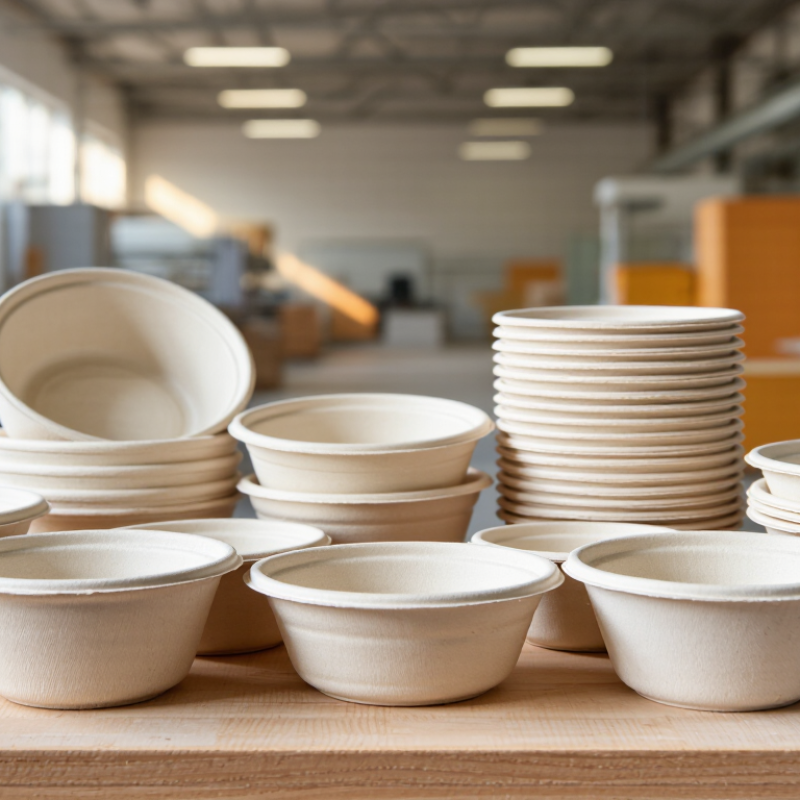
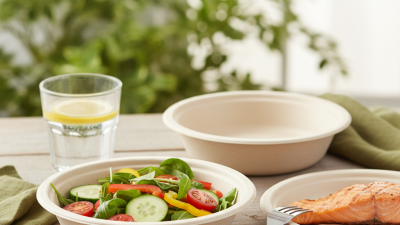
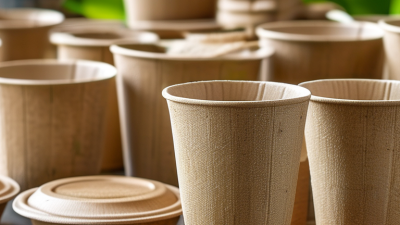
Bagasse is the fibrous material left after sugarcane juice is extracted. Manufacturers clean, press, and mold these fibers into disposable bowls. The process uses a renewable agricultural residue instead of newly made petroleum plastic. Bagasse bowls are lightweight, stackable, and suitable for soups, rice, salads, and warm desserts. Their slightly textured surface gives a natural, firm feel in the hand. They are widely used by caterers, restaurants, food trucks, schools, and event organizers. However, they may soften after long exposure to liquid. They are not a perfect answer.

When comparing disposable bagasse bowl suppliers, inspect more than appearance. Ask about food-contact testing, material thickness, heat tolerance, packaging hygiene, and production consistency. A reliable supplier should provide clear specifications and relevant compliance documents. Bowl sizes should match actual portions, not only attractive catalog photographs. I would also test a sample with hot soup for thirty minutes. Small differences can affect customer experience. Compostable claims require caution, because suitable industrial facilities may not exist everywhere. Disposal instructions should match local waste systems.

Tips: Choose a bowl with a stable base and rolled rim. Check whether lids fit securely. Store cartons in a dry, clean room. Avoid ordering large quantities before testing. I once overlooked stacking height; storage space became a practical problem. That detail deserves more attention than it usually receives.

What Are Disposable Bagasse Bowls and Why Are They Used?

Bagasse bowls are molded from sugarcane fiber, a renewable by-product of sugar production. They are widely used for takeaway meals, soups, salads, desserts, and other food-service applications. The chart shows common nominal bowl capacities, converted from US fluid ounces to milliliters.

Actual capacity, dimensions, and suitability may vary by product design and manufacturer.

How to Evaluate Bagasse Bowl Suppliers in China

China Top 10 Disposable Bagasse Bowl Suppliers

How to Evaluate Bagasse Bowl Suppliers in China

Choosing from China’s top disposable bagasse bowl suppliers requires more than comparing prices. Inspect the bowl’s rim, base, and inner coating. A reliable sample should feel firm, without sharp fibers or unusual odor. Test it with hot soup for at least 30 minutes. Check whether the base softens or leaks. Small details often reveal production quality.

Ask suppliers for food-contact test reports, material specifications, and factory audit records. Confirm that the bowl uses responsibly sourced bagasse and safe additives. Review production capacity, mold options, minimum order quantities, and lead times. Clear answers matter. A supplier that avoids technical questions may create problems later. Packaging also deserves attention, especially when cartons face humid warehouse conditions.

Tips: Request samples from several suppliers and test them under identical conditions. Visit the factory, if possible, or arrange a live video inspection. Check batch traceability and complaint procedures. Do not trust attractive certificates without verifying their issuing organization. A polished sample can still hide inconsistent mass production. I have seen evaluations focus too heavily on appearance. That is a mistake. Delivery records, communication speed, and corrective action often matter just as much.

China’s Top 10 Disposable Bagasse Bowl Suppliers

China’s Top 10 Disposable Bagasse Bowl Suppliers are often judged by more than production volume. Reliable suppliers usually process sugarcane fiber into sturdy, food-contact bowls with consistent wall thickness. Their factories should show clear material records, clean production areas, and documented quality checks. Experienced buyers often request samples before discussing large orders. A bowl may look strong, yet soften after twenty minutes with hot soup.

Supplier evaluation should include capacity, mold selection, packaging control, and delivery performance. Ask for test reports covering food-contact safety, temperature resistance, and compostability claims. Certifications can support credibility, but they should match the actual factory and product. Factory audits also reveal details that catalogs hide, such as dusty storage rooms or poorly sealed cartons. These small issues can create expensive problems.

I would compare at least three sample batches from each shortlisted supplier. Check rim smoothness, leakage, odor, and stacking space. Small defects matter.

Price alone is a weak measure. A cheaper bowl may use thinner material or create higher shipping losses. Some suppliers communicate quickly but provide vague answers about traceability. That deserves caution. Even strong manufacturers may have inconsistent output during peak seasons, so production schedules need written confirmation. My own assessment would remain provisional until repeated orders prove stable quality, accurate documentation, and responsive after-sales handling.

How Chinese Suppliers Compare in Quality, Pricing, and Customization

China’s bagasse bowl suppliers compete most clearly on quality, price, and customization. FAOSTAT recorded roughly 1.9 billion tonnes of global sugarcane production in 2022, creating a large residual-fiber base. However, abundant bagasse does not guarantee consistent bowls. Weight matters. Buyers should check basis weight, rim strength, leakage resistance, oil performance, and heat tolerance using production samples.

Pricing comparisons need more than unit cost. A lower quotation may reflect thinner walls, higher reject rates, weaker cartons, or excluded tooling fees. Compare the full landed cost, including molds, testing, packaging, freight, and replacement rates. A practical sourcing sheet should record bowl weight, dimensions, carton quantity, and moisture limits. Samples can mislead. Pre-shipment inspection and batch records provide stronger evidence than polished product photos.

Customization is a major advantage among Chinese manufacturers, especially for embossed logos, unusual depths, divided compartments, and retail-ready packing. Yet customization increases mold charges and may extend lead times. Require food-contact migration reports from an ISO/IEC 17025-accredited laboratory, plus relevant compostability evidence such as EN 13432 or ASTM D6400, where applicable.

UNEP’s 2023 report states that plastic pollution could be reduced by 80% by 2040, but bagasse is not automatically compostable in every disposal system. That point is often overlooked. Supplier claims should match the destination market, certification scope, and actual factory process.

What to Check Before Choosing a Bagasse Bowl Supplier

Choosing among the China top 10 disposable bagasse bowl suppliers requires more than comparing prices. Check the supplier’s manufacturing experience, factory capacity, and food-contact documentation. Ask for recent test reports covering heat resistance, leakage, odor, and material safety. A reliable supplier should explain the bagasse source and production process clearly. Vague answers deserve caution.

Request samples in several sizes. Fill each bowl with hot soup for thirty minutes, then check softness, warping, and leaks. Test stacking strength too, especially if bowls will travel through busy kitchens. Confirm whether the supplier controls thickness consistently. One weak batch can damage customer trust. I have found that attractive samples sometimes hide unstable mass production, so inspect samples from different production dates.

Tips: Confirm minimum order quantity, lead time, carton dimensions, and replacement terms in writing. Review packaging for moisture protection and clean storage. Ask whether the supplier supports independent factory audits. Certification alone is not enough. Check its scope and expiry date. A supplier may promise customization, yet tooling fees or slow approvals can change the real cost. Leave room for these practical risks. Mistakes happen. Clear records reduce them.

China Top 10 Disposable Bagasse Bowl Suppliers - What to Check Before Choosing a Bagasse Bowl Supplier

No. Evaluation Dimension What to Check Recommended Evidence Buyer Acceptance Criteria
1 Raw Material Traceability Confirm that the bowls are made from bagasse, the fibrous residue left after sugarcane juice extraction, and identify any added fibers or processing aids. Material specification, ingredient declaration, batch records, and supplier traceability procedure. Raw materials are clearly identified and traceable from production batch to shipment.
2 Food-Contact Compliance Check whether the product is suitable for direct contact with food in the intended destination market. Current laboratory reports and a declaration of compliance for the target market, such as applicable U.S. FDA food-contact requirements or EU food-contact regulations. Documents match the exact product, material, additives, and intended food-contact conditions.
3 Product Safety Testing Review testing for overall migration, heavy metals, microbiological safety, and other substances required by the destination market. Independent test reports issued by an accredited laboratory, including test date, product code, and sample description. Reports are recent, traceable, and cover the actual bowl specification being purchased.
4 Leak Resistance Evaluate resistance to leakage when holding water-based, oily, acidic, and hot foods. Supplier test method, test duration, food simulant details, temperature, and sample quantity. No visible leakage, softening, or loss of structural integrity under the agreed use conditions.
5 Heat and Cold Performance Confirm performance with hot foods, refrigerated products, and any intended freezer or reheating application. Temperature range, exposure time, microwave or freezer compatibility statement, and test results. Performance claims are supported by testing and clearly state any usage limitations.
6 Dimensional Accuracy Verify nominal diameter, height, rim shape, capacity, nesting ratio, and compatibility with lids or packaging equipment. Technical drawing, tolerance range, capacity measurement method, and approved production sample. Dimensions and tolerances meet the approved drawing and work with the buyer’s filling and packing process.
7 Physical Strength Assess rim stiffness, compression resistance, bowl stability, and resistance to deformation during stacking and transport. Compression or stacking test results, inspection standards, and samples from mass production. Bowls remain stable, stackable, and usable without cracking or excessive deformation.
8 Manufacturing Quality Control Review controls for forming, drying, trimming, contamination prevention, metal detection, packing, and final inspection. Quality manual, inspection checklist, corrective-action records, process-control plan, and audit access. Documented controls are implemented consistently and nonconforming products are segregated.
9 Environmental Documentation Distinguish between material composition, industrial compostability, home compostability, biodegradability, and disposal instructions. Certification or test report against the specific compostability standard claimed, plus packaging and disposal information. Environmental claims are specific, independently supported, and legally suitable for the target market.
10 Supply and Commercial Capability Evaluate minimum order quantity, lead time, production capacity, packaging options, customization, payment terms, and after-sales support. Written quotation, production schedule, capacity statement, sample approval process, and service-level terms. Commercial terms are clear, capacity is adequate for forecast demand, and quality requirements are included in the purchase agreement.

Recommended selection method: Request samples from several qualified suppliers, test them under the actual food and temperature conditions, verify product-specific compliance documents, and approve a written specification before placing a bulk order.